
Soaring Steel with Style
Exhibits Pavilion Celebrates Great Railway Terminals
The Museum of the American Railroad achieved a significant benchmark in construction in 2024 - completion of basic infrastructure, including storm drainage, 12,000 feet of track and 43,000 square feet of paved surfaces for visitors. And now, we're on to the most exciting phase yet, the Exhibits Pavillion!
This 95,000 square foot pavilion will rise above the exhibit tracks, providing shelter for the rolling stock collection and Museum guests. But this will be no ordinary structure. Reminiscent of the great train sheds at Saint Louis, Nashville, and Boston, the pavilion will feature soaring trusses and ornamental steel work. In classic form-follows-function style, the pavilion will complement the Museum's historic locomotives and rail cars in its architectural splendor.
Planning and design work was completed in 2018, with each aspect of the pavilion engineered in harmony with existing site improvements. The open-air period-style structure will create a setting that immerses visitors in industrial art and steam-era architecture. The awe-inspiring steel angles and shapes will contrast with today's predictable designs that mask functionality.
With an estimated cost of $10 million, funding for the Exhibits Pavillion will come from public and private sources. The Museum will launch a capital campaign in the near future, building on previous successful funding initiatives that have resulted in generous gifts from around North Texas. The Pavillion will generate a significant return to the region through tourism, educational programs for area schools, and as a special events venue. In addition to providing an immersive experience for visitors, the Pavillion is critical to protecting the Museum's precious collection of trains from the elements. With an average age of 78 years, the case can be made for funding the Pavillion as an essential means of ensuring the trains are preserved for future generations.
Steel as an Artform
What better way to house and present the Museum’s historic collection of locomotives and rail cars than to create a structure that immerses visitors in the period? The Museum’s exhibits pavilion provides 95,000 square feet of covered space while featuring practical and functional steel arches and trusses that are a symphony of architectural elements. Borrowing from designs from the early 1900s, Nationwide Construction of Mansfield, Texas has created an exhibits pavilion that is a masterpiece all its own. Nationwide specializes in modern, large rail facilities and devoted their best talent to this breathtaking animation. It complements the main museum building, and while the two are in harmony, they each stand alone as impressive architectural marvels. This animation takes you inside the massive structure as well as its impressive arched exterior.
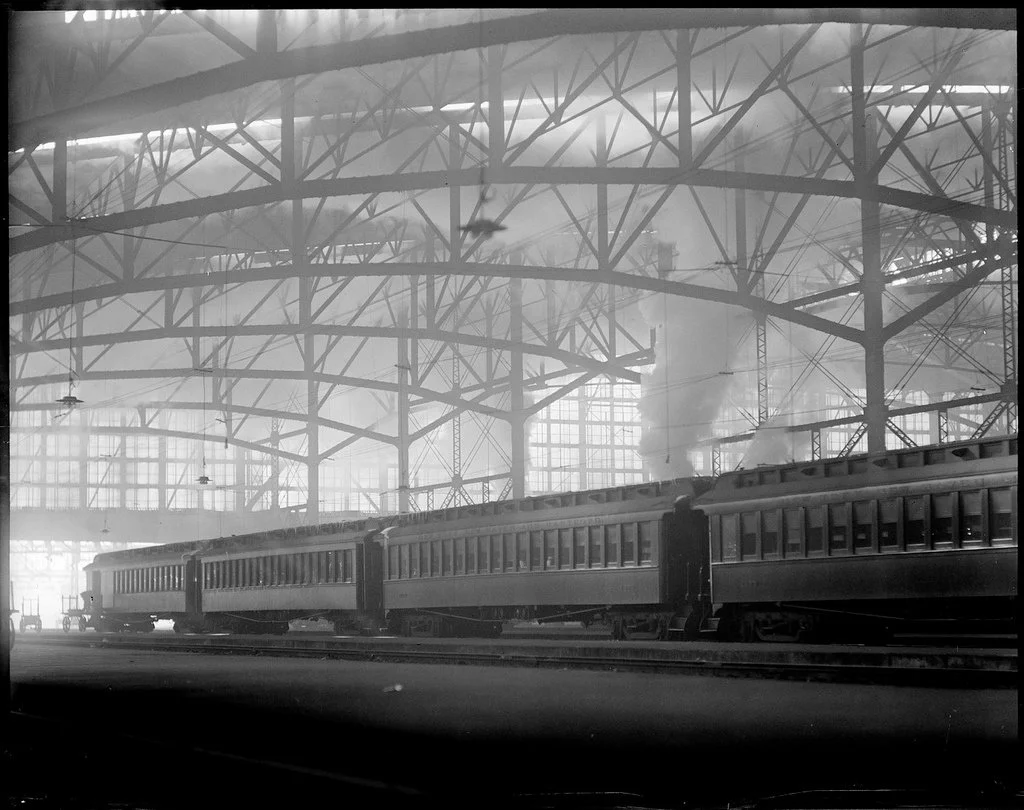
Great stations of the past featured massive train sheds to protect passengers from the elements. Located mainly in northern cities, these structures were unique in design and were tailored to the needs of urban stations that served intercity passengers and commuters. The Museum’s exhibits pavilion draws heavily from these train sheds of the past with soaring arches, creating steel geometry that inspires visitors and creates a sense of place like no other.
Photo: Boston South Station circa 1930.

The arrival and departure of trains was an exciting, almost surreal experience. Whether boarding a train for far-off destinations or greeting friends and loved ones de-training on the platform, the human experience was often unforgettable in the lives of travelers. This David Plowden photograph perfectly captures a moment in time - a great interaction of people, steam, and magnificent machines.
Westbound Delaware, Lackawanna and Western train Phoebe Snow calls on Scranton, PA in 1964.